
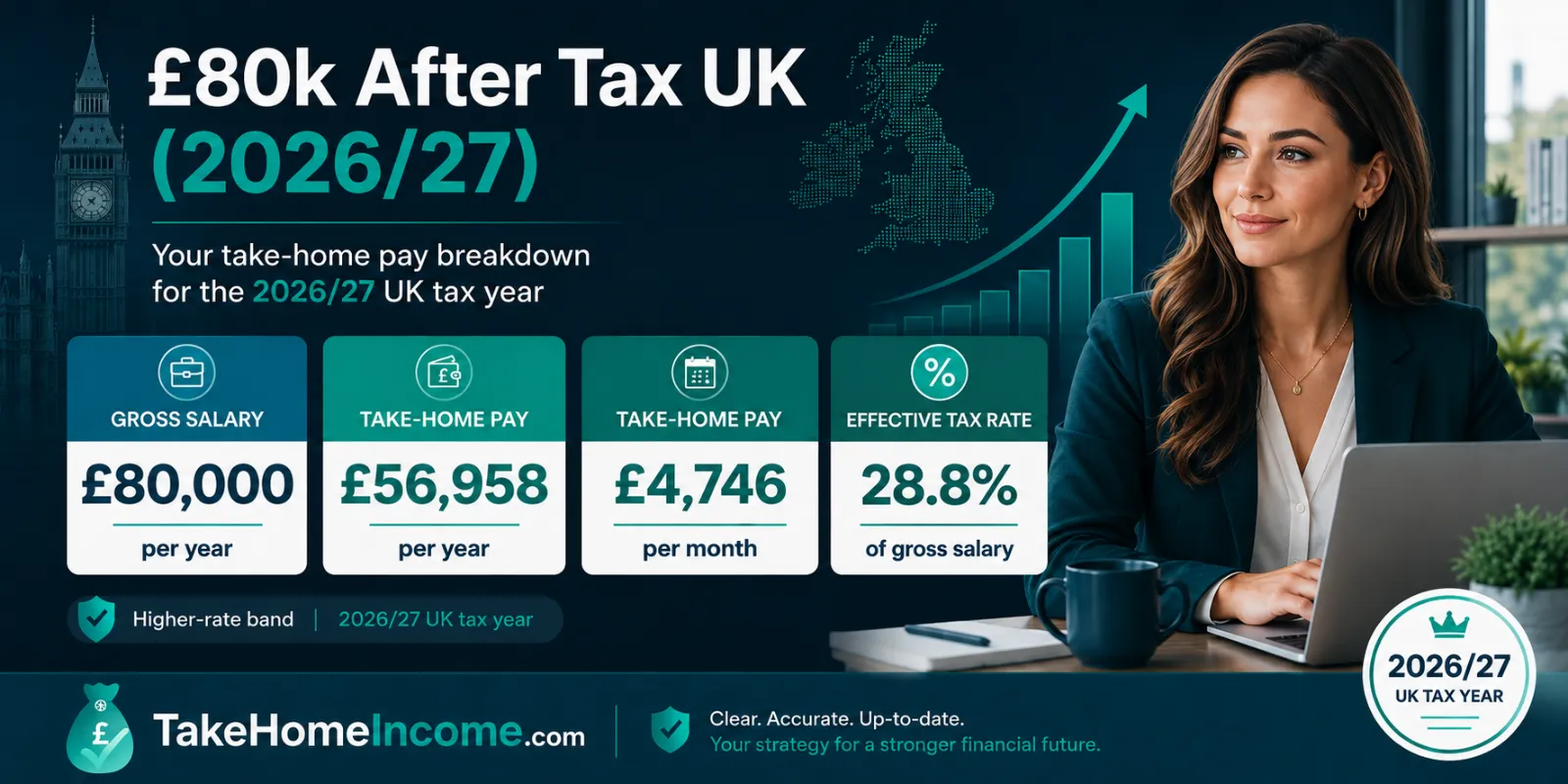
On an £80,000 salary in the 2026/27 tax year, a typical employee in England, Wales or Northern Ireland takes home about £56,958 a year, roughly £4,746 a month, after Income Tax and National Insurance, assuming no pension or student loan. That works out at an effective tax rate of 28.8%, even though the top slice of your pay is taxed at the 40% higher rate. This guide shows exactly how the numbers add up, why the headline 40% is not the rate you actually pay, and how close £80k sits to the notorious £100,000 tax trap.
The £80,000 mark is an interesting place to sit in the UK tax system. You are clearly a higher-rate taxpayer, yet you still hold on to your entire £12,570 Personal Allowance, something earners just £20,000 further up the ladder begin to lose. That combination keeps your overall tax bill far lighter than the “40% bracket” label might suggest. Below we break down every pound of the calculation, compare England with Scotland, factor in pensions and student loans, and show where £80k ranks against the typical UK salary.
How much is £80,000 after tax in the UK?
For 2026/27, an £80,000 salary in England, Wales or Northern Ireland breaks down as follows (standard tax code, Category A National Insurance, no pension or student loan):
| Item | Amount |
|---|---|
| Gross salary | £80,000 |
| Personal Allowance | £12,570 (tax-free) |
| Income Tax | −£19,432 |
| National Insurance | −£3,610 |
| Take-home pay (annual) | £56,958 |
| Monthly | about £4,746 |
| Weekly | about £1,095 |
| Daily (260 working days) | about £219 |
So just over £23,000 disappears in tax and National Insurance, and you keep a little under £57,000.
The 2026/27 breakdown: Income Tax, NI and the 40% slice
UK tax is charged in bands, and you only pay each rate on the part of your income that falls inside that band. Here is the arithmetic, step by step.
Income Tax (£19,432)
- Personal Allowance, 0%: the first £12,570 is tax-free. Because £80,000 is below £100,000, you keep the full allowance.
- Basic rate, 20%: the next £37,700 (taxable income from £12,571 to £50,270) is taxed at 20% = £7,540.
- Higher rate, 40%: income from £50,271 up to £80,000 is £29,730, taxed at 40% = £11,892.
Total Income Tax = £7,540 + £11,892 = £19,432.
National Insurance (£3,610)
As a standard Category A employee, your Class 1 National Insurance is:
- 8% on earnings between £12,570 and £50,270, that is £37,700 × 8% = £3,016.
- 2% on earnings above £50,270, that is £29,730 × 2% = £594.60.
Total National Insurance ≈ £3,610. Notice that once you cross £50,270, the NI rate on the extra pay falls from 8% to 2%, National Insurance is lighter on higher earnings, which is part of why the overall rate stays well below 40%.
What is the effective tax rate on £80k? (28.8% explained)
Your marginal rate is the rate on your next pound earned, at £80k that is 40% Income Tax plus 2% National Insurance. Your effective rate is the total tax and NI as a share of your whole salary. These two numbers are very different, and confusing them is one of the most common mistakes people make.
| Measure | Rate at £80k | What it means |
|---|---|---|
| Marginal Income Tax rate | 40% | Tax on your next £1 of salary |
| Marginal rate incl. NI | 42% | 40% tax + 2% NI on the next £1 |
| Effective tax rate (Income Tax only) | 24.3% | £19,432 ÷ £80,000 |
| Effective rate (Income Tax + NI) | 28.8% | £23,042 ÷ £80,000 |
The effective rate is 28.8% because most of your salary is taxed at 0% or 20%, and only the slice above £50,270 reaches 40%. The 40% figure on your payslip is the top rate you touch, not the average you pay. You keep 71.2% of every pound you earn at this salary.
This distinction matters for real decisions. If a recruiter offers you a £5,000 pay rise, that extra money is taxed at your marginal 42%, so you would keep about £2,900 of it, not the 71.2% your overall salary keeps. Equally, a £5,000 pension contribution or a salary-sacrifice benefit saves you tax at that same 42% marginal rate. Higher earners gain the most from deductions precisely because the top of their income is taxed hardest, while the average stays comfortably below the headline band.
Is £80,000 close to the 60% tax trap?
Not yet, but it is the same road. At £80,000 you are £20,000 below the £100,000 threshold where the so-called 60% tax trap begins. From £100,000, your Personal Allowance is withdrawn by £1 for every £2 you earn, which creates an effective marginal rate of about 60% on income between £100,000 and £125,140, where the allowance disappears entirely.
- Below £100,000 you keep your full £12,570 Personal Allowance, which is exactly why £80k enjoys a clean 28.8% effective rate.
- A £20,000 pay rise to £100,000 would still be relatively tax-efficient (taxed at 40% + 2% NI).
- The pain starts above £100,000, where each extra £100 of salary can cost around £60 in tax and lost allowance.
If you are heading towards six figures, it is worth reading our deeper guides on the £100k and 60% tax trap before your next pay review, because a pension contribution can sidestep it entirely.
With a pension: lowering tax and edging away from the taper
Pension contributions made by salary sacrifice come out of your pay before Income Tax and National Insurance, so they cut your tax bill and reduce your adjusted income, the figure that matters for the £100k taper. Here is what a 10% sacrifice (£8,000) looks like at £80k:
| Item | No pension | 10% salary sacrifice |
|---|---|---|
| Salary taxed | £80,000 | £72,000 |
| Income Tax | £19,432 | £16,232 |
| National Insurance | £3,610 | £3,450 |
| Take-home cash | £56,958 | about £52,317 |
| Into your pension | £0 | £8,000 |
Putting £8,000 into your pension only reduces your take-home cash by about £4,640, because you save roughly £3,360 in Income Tax and National Insurance. Your money does not vanish, it moves into your pension, and your combined cash-plus-pension position rises to about £60,317. For higher earners approaching £100,000, this is the single most effective lever for both growing wealth and staying clear of the 60% band.
What about a student loan on £80k?
Graduate repayments are an extra deduction on top of tax and NI. They are charged at 9% of everything you earn above your plan’s threshold (6% for a Postgraduate Loan), and at £80,000 that adds up quickly. On the most common undergraduate plan, Plan 2 (threshold £29,385), you would repay 9% of £50,615, which is about £4,555 a year.
| Item | No student loan | With Plan 2 |
|---|---|---|
| Take-home (annual) | £56,958 | about £52,402 |
| Take-home (monthly) | about £4,746 | about £4,367 |
The repayment thresholds differ by plan, Plan 1 is £26,900, Plan 4 (Scotland) is £33,795, Plan 5 is £25,000 and Postgraduate is £21,000, so your exact deduction depends on which plan you are on. Unlike tax, a student loan is a repayment of a debt, not a permanent levy: it stops once the balance is cleared.
£80,000 after tax in Scotland vs England
Scotland sets its own Income Tax rates and bands. At £80,000 a Scottish taxpayer pays noticeably more, because Scotland’s 42% higher rate starts at £43,663 (versus £50,270 in England) and a 45% advanced rate applies from £75,001.
| England / Wales / NI | Scotland | |
|---|---|---|
| Income Tax | £19,432 | £21,732 |
| National Insurance | £3,610 | £3,610 |
| Take-home pay | £56,958 | about £54,657 |
| Effective rate | 28.8% | 31.7% |
A Scottish taxpayer on £80,000 pays about £2,300 more in Income Tax per year, roughly £192 a month, than someone on the same salary in England. National Insurance is identical, because it is set UK-wide.
Is £80k a good salary in the UK?
Yes, £80,000 is a high salary by any UK measure. Median full-time pay is roughly £37,000–£38,000, so £80k is more than double the typical wage and sits comfortably inside the top 5% of individual earners. A few useful reference points:
- It is well above the £50,270 higher-rate threshold, so you are a higher-rate taxpayer, but only on the slice above that line.
- Your take-home of about £4,746 a month is roughly £1,400–£1,500 a month more than someone on £50,000.
- You keep your full Personal Allowance, which earners between £100,000 and £125,140 lose, a quiet but real advantage of being at £80k rather than £110k.
How far it stretches still depends heavily on where you live, housing costs and household size, but on the raw numbers, £80,000 is firmly in “high earner” territory.
It also helps to see how £80k take-home compares with the salaries either side of it (England, 2026/27, no pension or student loan):
| Gross salary | Take-home (year) | Take-home (month) | Effective rate |
|---|---|---|---|
| £60,000 | about £45,357 | about £3,780 | 24.4% |
| £70,000 | about £51,157 | about £4,263 | 26.9% |
| £80,000 | £56,958 | £4,746 | 28.8% |
| £90,000 | about £62,757 | about £5,230 | 30.3% |
| £100,000 | about £68,557 | about £5,713 | 31.4% |
Notice how the effective rate climbs only gradually across this range, from 28.8% at £80k to 31.4% at £100k, because the full Personal Allowance is still intact throughout. A £20,000 raise from £80,000 to £100,000 adds about £11,600 to your annual take-home, meaning you keep roughly 58% of the increase. It is only past £100,000 that the maths turns sharply against you.
Key takeaways
- £80,000 after tax in the UK is about £56,958 a year (£4,746 a month) in England, Wales or Northern Ireland for 2026/27.
- Deductions are £19,432 Income Tax and £3,610 National Insurance, £23,042 in total.
- The effective tax rate is 28.8%, even though your marginal rate is 40% (42% including NI). You keep 71.2% of your salary.
- You are £20,000 below the £100,000 point where the Personal Allowance taper creates a 60% effective marginal band.
- In Scotland, the same salary takes home about £54,657, roughly £2,300 less a year.
- A 10% pension sacrifice (£8,000) cuts take-home by only about £4,640 thanks to £3,360 of tax and NI relief.
Work out your exact £80k take-home
Your real figure depends on your region, pension contribution, student loan plan, tax code and any benefits in kind. Run your own numbers with our UK salary after tax calculator, it does the full 2026/27 calculation and shows every deduction line by line.