
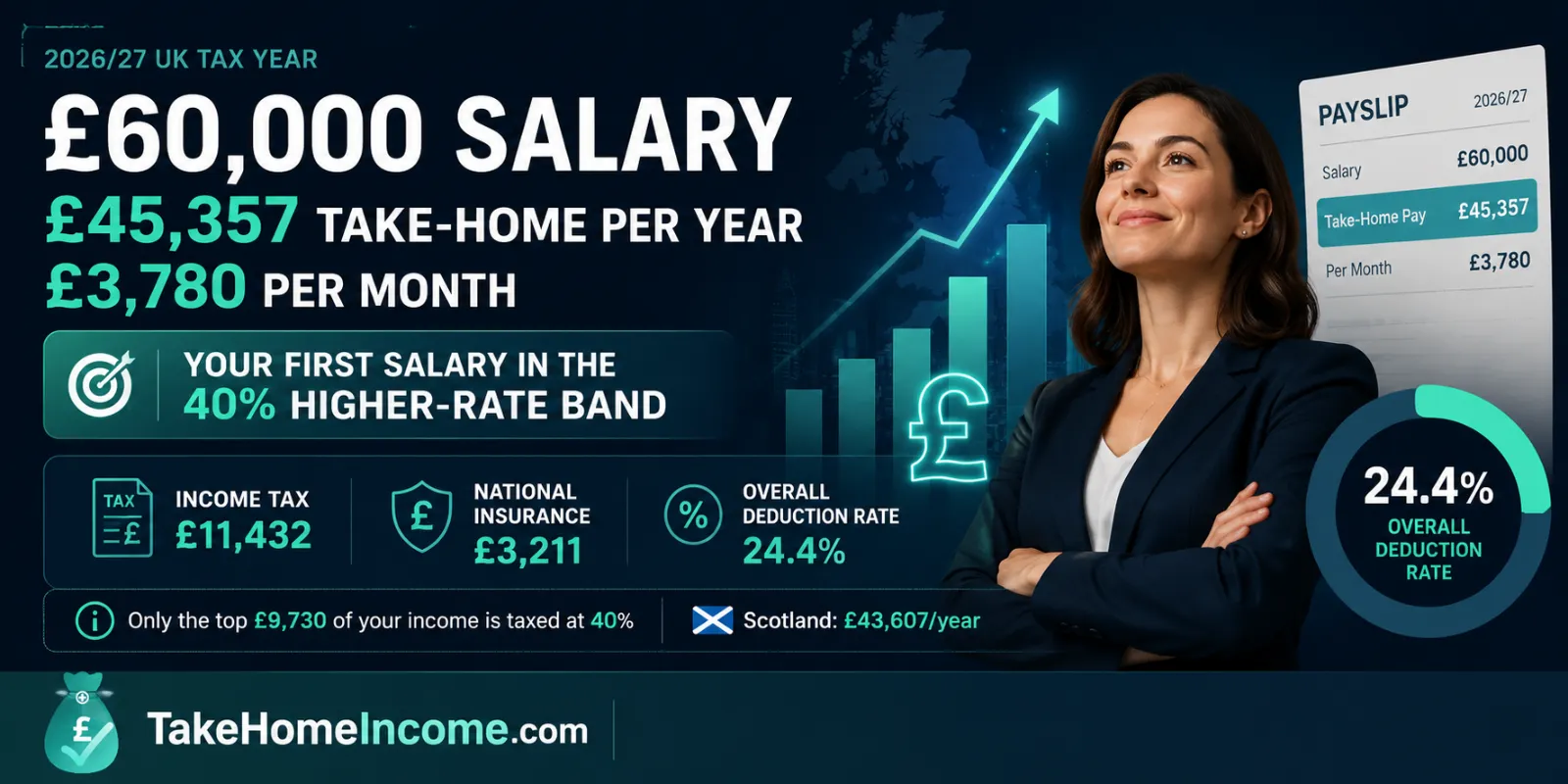
A £60,000 salary is the first common pay level that sits fully inside the 40% higher-rate band. For a standard employee in England, Wales or Northern Ireland in 2026/27, £60,000 gives a take-home pay of about £45,357 a year, roughly £3,780 a month, assuming no pension or student loan. That is after £11,432 in Income Tax and £3,211 in National Insurance, an overall deduction rate of about 24.4%.
£60,000 after tax: take-home at a glance
Here is the headline picture for a £60,000 salary in England, Wales or Northern Ireland (2026/27, Category A employee, no pension or student loan):
| Measure | Take-home |
|---|---|
| Yearly | £45,357 |
| Monthly | £3,780 |
| Weekly | about £872 |
| Effective deduction rate | 24.4% |
Note the effective rate: even though £60,000 is a "40% band" salary, you only lose about a quarter of your gross overall. That is because the 40% rate applies to just one slice of your income, not all of it.
How much of £60,000 hits the 40% band?
Income Tax is charged band by band. You subtract the Personal Allowance of £12,570 first (your income is below £100,000, so the allowance is not tapered), leaving £47,430 of taxable income. That £47,430 is then split across two rates:
| Slice | Amount | Rate | Tax |
|---|---|---|---|
| Personal Allowance | £12,570 | 0% | £0 |
| Basic rate | £37,700 | 20% | £7,540 |
| Higher rate | £9,730 | 40% | £3,892 |
| Total Income Tax | £60,000 | £11,432 |
So only the top £9,730 of your salary, the part above the £50,270 higher-rate threshold, is taxed at 40%. That slice costs you £3,892. The other £37,700 is taxed at the 20% basic rate. This is the single most misunderstood point about a 40% salary: you are not taxed at 40% on the whole £60,000.
Why does my National Insurance drop to 2% above £50,270?
National Insurance works the opposite way to Income Tax, the rate falls on your highest earnings. As a Category A employee in 2026/27 you pay:
- 0% on the first £12,570
- 8% on earnings from £12,570 to £50,270, that is 8% of £37,700 = £3,016
- 2% on earnings above £50,270, that is 2% of £9,730 = £194.60
Your total NI is therefore about £3,211. Notice that the same £9,730 slice taxed at 40% Income Tax is taxed at just 2% NI. So the real "marginal" deduction on income between £50,270 and £60,000 is 42% (40% + 2%), not the 48%+ some people assume. Put another way: of every extra £100 you earn in that band, you keep £58.
Do I pay the Child Benefit charge at £60k?
This is where many searchers get caught out by old figures. The High Income Child Benefit Charge (HICBC) thresholds changed, and for 2026/27 the charge applies between £60,000 and £80,000 of adjusted net income:
- Below £60,000, no charge, you keep all your Child Benefit.
- At exactly £60,000, still no charge. The charge is 1% of your Child Benefit for every £200 of income over £60,000, so at the threshold itself it is £0.
- Between £60,000 and £80,000, the charge claws back a rising share of the benefit.
- At £80,000 or above, the charge equals 100% of the Child Benefit, fully withdrawing it.
So on a salary of exactly £60,000, you sit right on the floor of the charge and keep your full Child Benefit. For reference, Child Benefit in 2026/27 is £27.05 a week for the first or only child and £17.90 a week for each additional child. The charge is based on adjusted net income, so pension contributions (and Gift Aid) can pull you back under £60,000 if you are just over.
What is my take-home with a workplace pension?
A pension contribution lowers your take-home pay, but by less than the contribution itself, because it also cuts your Income Tax and (under salary sacrifice) your National Insurance. Here is £60,000 with a typical 5% salary-sacrifice contribution (£3,000 a year):
| Item | No pension | 5% pension |
|---|---|---|
| Pension contribution | £0 | £3,000 |
| Income Tax | £11,432 | £10,232 |
| National Insurance | £3,211 | £3,151 |
| Take-home pay | £45,357 | £43,617 |
| Monthly | £3,780 | £3,635 |
Your take-home falls by just £1,740, yet £3,000 has gone into your pension, the extra £1,260 is the Income Tax and NI you saved. Because the sacrificed pay comes off the top (the part that would have been taxed at 40% plus 2% NI), pension saving is especially efficient for a higher-rate earner. It also reduces your adjusted net income, which can keep you under the £60,000 HICBC floor.
How much is £60,000 after tax in Scotland?
Scottish taxpayers use their own Income Tax bands, and at £60,000 they pay noticeably more. Scotland’s 42% higher rate starts at £43,663, well below England’s £50,270, so a larger slice of your salary is taxed at the higher rate. National Insurance is identical (it is set UK-wide).
| England / Wales / NI | Scotland | |
|---|---|---|
| Income Tax | £11,432 | £13,182 |
| National Insurance | £3,211 | £3,211 |
| Take-home pay (year) | £45,357 | £43,607 |
| Take-home (month) | £3,780 | £3,634 |
| Effective deduction rate | 24.4% | 27.3% |
So a Scottish taxpayer on £60,000 keeps roughly £1,750 less per year, about £146 a month, than someone on the same salary in England. The difference comes entirely from Income Tax; the Scottish Income Tax is split across the starter (19%), basic (20%), intermediate (21%) and higher (42%) bands.
Is £60k a good salary in the UK?
Yes, £60,000 is well above the UK average. Median full-time earnings sit around the mid-£30,000s, so £60,000 puts you comfortably in the top fraction of earners and into the 40% tax band that only a minority of workers reach. In day-to-day terms:
- £3,780 a month take-home in England (about £3,634 in Scotland) before any pension or student loan.
- Enough to cover a typical mortgage or rent, bills and savings in most of the UK, though London housing costs absorb more of it.
- You are at the threshold where pension contributions become very tax-efficient and where keeping income under £60,000 (via pension) protects Child Benefit.
- A pay rise above £60,000 is taxed at a 42% marginal rate (40% tax + 2% NI), so a chunk of any raise goes to HMRC, pension sacrifice is a popular response.
Whether it "feels" generous depends heavily on your housing costs, household size and location, but on the raw numbers £60,000 is a strong salary.
Key takeaways
- £60,000 after tax is about £45,357 a year in England, Wales or NI for 2026/27, roughly £3,780 a month.
- Income Tax is £11,432 and National Insurance is £3,211, an overall rate of about 24.4%.
- Only the top £9,730 (income above £50,270) is taxed at 40%, that slice costs £3,892.
- NI drops to 2% above £50,270, so income in the higher band has a 42% marginal rate, not 48%+.
- At exactly £60,000 there is no Child Benefit charge; the HICBC runs from £60,000 to full withdrawal at £80,000.
- In Scotland, £60,000 nets about £43,607 a year, roughly £1,750 less than England.
- A 5% pension cuts take-home by only £1,740 while adding £3,000 to your pension.
Calculate your exact £60k take-home
Your real take-home depends on your region, pension, student loan plan, tax code and any benefits-in-kind. Run your own figure with our UK salary after tax calculator, which does the full 2026/27 calculation and shows every deduction line by line.